AI & Models
Ericsson engineers detail 6G's AI-driven design and the role global cooperation plays !
Your next phone upgrade may not be about faster download speeds or crisper video streaming, but whether those networks can handle billions of intelligent agents and systems making decisions for you.

Listen to ArticleBeta
0 min listen
Quick Takeaways
•Your next phone upgrade may not be about faster download speeds or crisper video streaming, but whether those networks can handle billions of intelligent agents and systems making decisions for you.
The Intelligent Fabric: How AI, Global Scale, and Structural Synergies Are Engineering the 6G Revolution
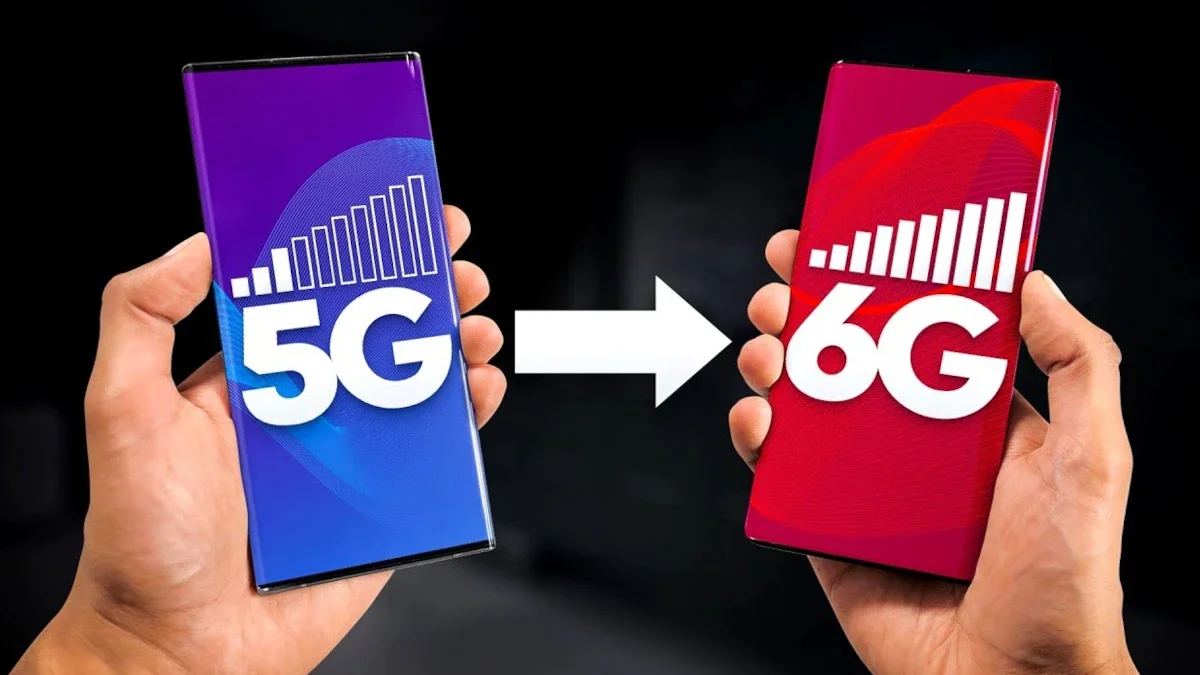
The architecture of global telecommunications is approaching a fundamental inflection point. For the past four decades, every successive generation of mobile technology has been defined by a clear, human-centric paradigm shift. The transition from the analog voice calls of 1G to the digital messaging of 2G laid the groundwork. Then, 3G popularized the mobile internet, 4G catalyzed the app economy and high-definition streaming, and 5G pushed the boundaries outward to encompass the Internet of Things (IoT), connecting industrial sensors, vehicles, and smart factories.
Yet, even as the global rollout of 5G remains incomplete, telecommunications engineers are deep at work architecting 6G. This upcoming standard represents a radical departure from its predecessors. It is not merely an incremental upgrade in raw throughput or a quest for crisper video rendering. Instead, 6G is being built from the ground up as an infrastructure tailored for distributed, autonomous intelligence.
Through insights shared by veteran Ericsson Research engineers and IEEE members Johan Sköld, Erik Dahlman, and Stefan Parkvall—recipients of the prestigious IEEE Jagadish Chandra Bose Medal in Wireless Communications—we can analyze the technical trade-offs, geopolitical realities, and architectural philosophies driving this next great leap in wireless connectivity.
1. The Paradigm Shift: AI as Both Consumer and Controller
Previous network generations treated artificial intelligence as an optimization layer added on top of existing hardware. In the 6G era, AI is integrated directly into the network architecture, serving as both the primary driver of network traffic and the core mechanism for network stabilization.
AI as the New User Base (Agentic Traffic)
For decades, cellular networks were engineered around human behavior profiles—predictable spikes in data usage during morning commutes, evening streaming hours, or localized sports events. 6G flips this design completely. The network must be architected to handle Agentic AI: vast ecosystems of intelligent software agents interacting autonomously with one another to execute complex, high-level directives issued by human users.
This machine-to-machine traffic will be highly dynamic, unpredictable, and massive in volume. Millions of autonomous systems—ranging from localized edge computing nodes to cloud-based large language models—will constantly exchange parameters, synchronize states, and execute transactions without any human intervention. The network must provide ultra-low-latency, hyper-reliable pipes to ensure these background AI interactions occur seamlessly.
The Self-Optimizing Intelligent Fabric
Concurrently, the infrastructure itself is becoming too complex for manual human administration or traditional, hard-coded algorithmic management. 6G networks will employ embedded machine learning models to create an intelligent fabric. This internal AI layer will take over real-time operational decisions, such as:
Dynamic Spectrum Allocation: Instantly shifting frequency bands to areas experiencing sudden machine-to-machine traffic spikes.
Predictive Beamforming: Directing spatial streams toward high-density clusters of moving autonomous agents.
Energy Orchestration: Powering down massive arrays of antenna elements during microseconds of inactivity, drastically lowering the massive carbon and financial footprints of global telecom infrastructure.
2. The Law of Market Scale vs. Technical Superiority
One of the most profound realities of global telecommunications engineering is that the best technical solution does not always win. The history of wireless standards is littered with highly sophisticated protocols that ultimately failed because they lacked market momentum.
       [ Early Stage ]                   [ Consolidation Stage ]
   Competing Protocols Rise               The Network Effect Wins
+----------------------------+        +----------------------------+
|  Standard A (e.g., 3GPP)   |------->| Dominant Global Footprint  |
|  Driven by massive scale   |        |  - Low deployment costs     |
+----------------------------+        |  - Universal compatibility |
              VS                      +----------------------------+
+----------------------------+                      ^
| Standard B (e.g., 3GPP2)   |----------------------+
| Sophisticated but isolated |         (Loses market share due to
+----------------------------+          poor economies of scale)
Historical Precedents: 3G and 4G Wars
During the development of 3G, the industry split between two competing bodies: 3GPP (developing WCDMA) and 3GPP2 (developing cdma2000). While cdma2000 was highly efficient and widely deployed in several major markets early on, 3GPP ultimately won total global dominance. This wasn't because it possessed flawless underlying mathematics, but because it secured a larger initial footprint.
A larger footprint triggers a powerful economic feedback loop:
Massive Economies of Scale: Manufacturers can produce silicon chipsets and radio components at a fraction of the cost when building for a unified global market.
Device Availability: Consumer electronics brands prioritize building devices for the framework with the most extensive international reach.
Reduced Capex: Network operators naturally opt for the standard that offers cheaper hardware and guaranteed global roaming capabilities.
This exact dynamic repeated during the 4G transition, where 3GPP’s Long-Term Evolution (LTE) completely sidelined Intel-backed WiMax, despite WiMax having a head start in deployment.
Implications for 6G Harmonization
As 6G takes shape, the stakes are higher than ever. The development is unfolding against a volatile backdrop of geopolitical friction, regional decoupling, and semiconductor supply chain vulnerabilities. The Ericsson engineering team highlights that keeping wireless standards unified globally is the single most critical challenge. If political fragmentation forces the world to split into regional 6G standards, the loss of shared economies of scale will dramatically slow down technological adoption and drive up infrastructure costs worldwide.
3. The Nordic Telecommunications Paradox
It is an interesting historical anomaly that a cluster of relatively small, sparsely populated Nordic countries became the undisputed cradle of global mobile telecommunications, producing enduring industry giants like Ericsson and Nokia, and early digital innovators like Skype.
FactorHistorical Impact on Nordic TelecomState-Backed ForesightIn the 1970s and 1980s, government-controlled public telephone operators pooled capital and engineering talent, pushing past national borders to co-develop the world’s first successful automated analog networks.The Small Market CatalystLacking a massive domestic consumer base to sustain them, Nordic firms were structurally forced to build products for the global marketplace right from day one.Cultural Tech-OptimismA societal readiness to adopt and experiment with new technologies created a highly responsive, localized testing ground for rapid software and hardware iterations.
This historical blueprint offers an instructive lesson for the 6G era: true technological leadership is not born out of isolation or defensive trade barriers. It is forged by designing highly open, scalable architectures that can seamlessly integrate into the global marketplace from the moment they are conceived.
4. The Human Element in an Automated Ecosystem
With AI poised to generate network traffic, manage cell towers, and optimize data routing, an existential question naturally arises: Will artificial intelligence eventually automate human wireless engineers out of relevance?
The consensus among the architects of modern wireless standards is a clear, emphatic no. This perspective recontextualizes AI not as a replacement for human intellect, but as an advanced cognitive lever.
+-------------------------------------------------------------+
|                     THE ENGINEERING MATRIX                  |
+-------------------------------------------------------------+
|  AI TASK SUITE:                                             |
|  [Pattern Recognition]  [Logistics]  [Simulation Tuning]    |
+-------------------------------------------------------------+
                             │
                             ▼ (Frees up mental bandwidth)
+-------------------------------------------------------------+
|  HUMAN CORE COMPETENCY:                                     |
|  [Conceptual Innovation] [First-Principles Risk Taking]      |
+-------------------------------------------------------------+
Breaking the Cycle of Incrementalism
In traditional R&D environments, engineers spend an immense amount of time on low-level, repetitive tasks: running endless simulations, analyzing log files, and troubleshooting software regressions. By delegating these diagnostic and predictive tasks to deep learning models, human researchers can reclaim vital cognitive bandwidth.
The most profound breakthroughs in telecommunications history—such as shifting from circuit-switched networks to packet-switched data networks—did not come from incremental optimization. They came from radical, first-principles creative thinking and a willingness to take calculated technical risks. AI excels at finding local maxima within predefined mathematical constraints, but it cannot reinvent the paradigm itself. Human creativity remains the ultimate engine of foundational discovery.
5. Strategic Horizon: Quantum Realities and the "Killer App" Fallacy
One of the persistent pitfalls of tech forecasting is the frantic search for a singular "killer app" to justify a new generation of hardware. History proves that these predictions are almost universally wrong.
The 3G Miscalculation: Planners assumed that video calls and ISDN-like packet data would be the primary drivers of 3G. No one foresaw the modern smartphone revolution, which only truly exploded when the underlying network matured into High-Speed Packet Access (HSPA).
The 5G Shift: Early marketing focused heavily on millimeter-wave (mmWave) deployments for lightning-fast consumer downloads, but the actual long-term value shifted toward industrial automation, robotics, and private campus networks.
Beyond Extended Reality (XR) to Quantum Cryptography
While 6G will easily scale up the deployment of immersive environments like Augmented, Virtual, and Mixed Realities (AR/VR/XR), its true long-term value lies in supporting technologies that are currently on the distant horizon.
Among these, quantum technology stands out. While general-purpose quantum computing remains highly speculative and decades away from mobile integration, quantum cryptography is approaching practical relevance. As quantum computing advances, it threatens to shatter traditional public-key encryption methods that secure global financial and personal data.
Consequently, 6G architectures must begin incorporating quantum-safe security principles today. This involves preparing wireless systems to transmit quantum information and distribute quantum keys over cellular connections, ensuring that the intelligent fabric of tomorrow remains fundamentally secure against future cryptographic breakthroughs.
Technical Appendix: The Evolution of Wireless Generations
To visualize how 6G redefines the core focus of mobile networks, we can trace the structural trajectory of cellular technology across generations:
GenerationPrimary Use CaseCore Enabling TechnologyStructural Bottleneck3GMobile Internet & VoiceWCDMA / HSPARaw Spectrum Bandwidth4GApp Economy & Video StreamingLTE / OFDMASpectral Efficiency & Latency5GIndustrial IoT & Massive ConnectivityNew Radio (NR) / Network SlicingEcosystem Fragmentation & Capex Costs6GConnected Intelligence & Agentic AIAI-Native Air Interface & Quantum-Safe CryptoGeopolitical Cleavages & Dynamic Compute Power
Efficient Analysis: The Real 6G Challenge
An objective analysis of the road to 6G reveals that the primary hurdles ahead are not strictly engineering-based; they are geopolitical and macroeconomic.
The technical blueprint is clear: 6G will succeed by blending high-frequency communications with localized edge computing, turning the network into a distributed, real-time computer. However, this transformation requires massive, coordinated capital expenditures from global operators who are still working to recoup their heavy investments in 5G infrastructure.
More critically, the engineering ethos that built our modern, hyper-connected world was entirely dependent on open, cross-border collaboration within bodies like the IEEE and 3GPP. If escalating trade blockades, semiconductor restrictions, and techno-nationalism fracture this collaborative framework, the industry risks splitting into isolated regional standards.
The true test of 6G will not be whether our algorithms can coordinate billions of AI agents, but whether global stakeholders can maintain the cooperative, unified market scale required to make that intelligence viable.
Reference:
https://www.techradar.com/pro/the-very-rapid-development-of-ai-ml-will-also-have-a-profound-impact-on-the-6g-design-ai-will-be-responsible-for-both-creating-more-network-traffic-and-strengthening-network-performance--Himanshu
Rate HIMANSHU G.T's Analysis
Your feedback directly trains our AI agents to improve.