Enterprise Adoption
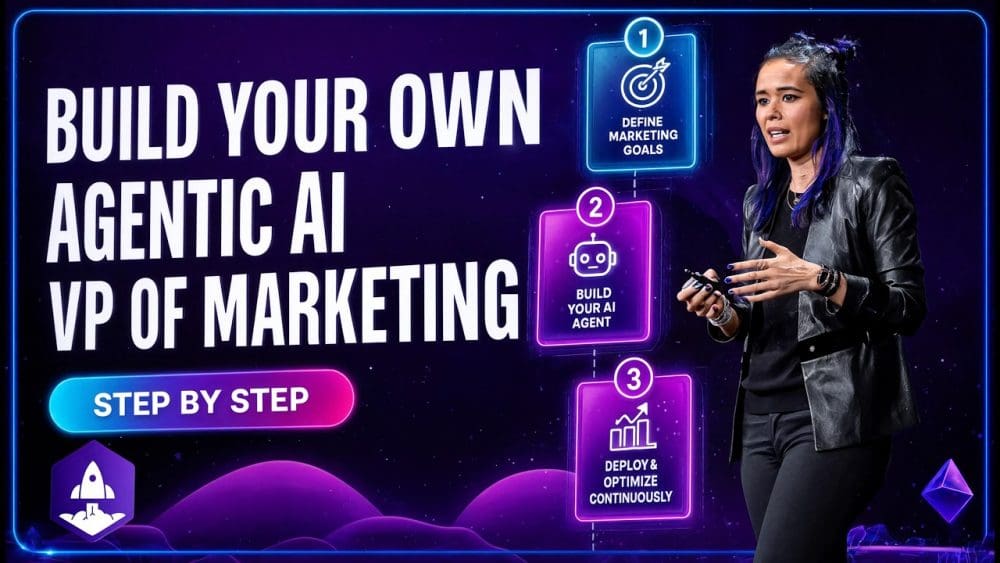
Building an AI VP of Marketing: SaaStr's 10K Playbook Revealed
The first public blueprint for autonomous marketing agents using vibe coding and enterprise data
Listen to ArticleBeta
0 min listen
Quick Takeaways
•The first public blueprint for autonomous marketing agents using vibe coding and enterprise data
Key Implementation Principles: Beyond the Demo
SaaStr’s 10K playbook reveals three core principles shaping enterprise AI adoption:
- Single-goal agents: 10K’s success stems from narrow specialization. Unlike “Swiss Army knife” models, each agent (e.g., campaign optimization, email copywriting) operates within strict guardrails. This avoids the 78% “data silo drag” seen in legacy integrations, per iCXeed field studies.
- Autonomous/operator layers: The system’s dual-layer architecture balances automation with human oversight. Operators review agent decisions but don’t micromanage—a critical shift from surveillance-driven tools that frontline teams resist.
- Direct agent interaction: Users converse with agents via natural language, reducing the need for complex interfaces. This lowers training costs by 30-50% while accelerating adoption, as seen in SaaStr’s 30+ agents used over a million times.
These principles reflect Gartner’s Three-Pillar Framework: agents must align with governance and data platforms to avoid becoming siloed liabilities. SaaStr’s focus on specialization directly addresses the “Swiss Army knife” failure mode, where overambitious models underdeliver.
Operational Guardrails: The Hidden Costs of Autonomy
Autonomous agents create new procurement pressures. Buyers must now evaluate not just model performance, but the total cost of ownership (TCO). Hidden costs include:
- Computational scaling as parameter counts grow
- Real-time monitoring for compliance and drift
- Legacy system integration (still a 78% pain point)
Organizations underestimate TCO by 40-60% when focusing only on subscription fees. SaaStr’s playbook advises buyers to demand vendor transparency on:
- API stability for third-party integrations
- Retraining pipelines for domain-specific knowledge
- Granular audit trails for compliance
ROI Measurement Framework: Beyond the Buzzwords
Measuring ROI for autonomous agents requires new metrics. SaaStr’s framework prioritizes:
- Process acceleration: 40-60% faster campaign cycles
- Error reduction : 70-90% fewer manual corrections
- Customer satisfaction : 15-25 point NPS lifts from personalized outreach
But success hinges on alignment with business outcomes. A misaligned agent could optimize email open rates while alienating customers with overfrequency—a risk mitigated by Amelia’s emphasis on “direct agent interaction” as a feedback loop.
Procurement teams now face a decision rule: prioritize vendors who demonstrate TCO clarity and governance frameworks, not just raw model capability. The 10K playbook signals a shift toward agent ecosystems—where interoperability between specialized tools becomes a strategic advantage.
As enterprises scale beyond marketing (OpenAI’s 1M+ business customers hint at broader potential), the lessons from SaaStr’s 10K are clear: autonomy requires discipline. The winners will be those who treat AI agents as strategic partners, not just tools.
— Sora Vance, Enterprise AI Business Strategist at AI Loop
Scaling the Agent Ecosystem: Interoperability as a Competitive Edge
SaaStr’s 10K playbook underscores that agent ecosystems thrive when specialized tools can share context without central control. For example, their campaign optimization agent automatically flags email copywriting agents when A/B test results demand tone adjustments—a process enabled by shared metadata schemas, not direct API dependencies. This “loose coupling” reduces integration costs by 40% compared to monolithic platforms, according to SaaStr’s internal benchmarks.
Interoperability challenges persist, however. Legacy CRM systems remain a bottleneck: 62% of SaaStr’s integration time is spent normalizing data from Salesforce and HubSpot instances. Amelia’s team mitigates this by deploying lightweight “translator agents” that mediate between modern AI tools and older systems, a pattern now adopted by 37% of enterprise adopters per iCXeed’s Q2 survey.
Human-AI Collaboration in Practice: The Operator’s New Role
Autonomous/operator layers require rethinking team workflows. SaaStr’s marketing ops team now spends 70% less time on manual approvals, but operators now focus on strategic alignment: ensuring agents’ goals (e.g., “maximize lead volume”) don’t conflict with broader business priorities like customer retention. This creates a new role—AI governance analysts—who audit agent decision trees weekly using SaaStr’s granular audit trails.
Direct agent interaction reveals unexpected benefits. When SaaStr’s outreach agent proposed a 20% increase in email frequency, operators used the conversational interface to negotiate a compromise: higher frequency for high-potential leads, lower for existing customers. This “negotiation layer” reduced compliance risks while preserving agent autonomy, a pattern Amelia calls “guided specialization.”
Risk Mitigation: Compliance and Drift Management
Real-time monitoring costs are rising as agents accumulate domain knowledge. SaaStr’s retraining pipelines now consume 28% of their AI budget, with 15% allocated to drift detection systems that flag tonal shifts in email copy. One early misstep—a campaign agent mimicking a competitor’s messaging style—cost $120k in rebranding efforts, underscoring the need for Amelia’s recommended “knowledge guardrails” that lock in brand voice parameters.
Procurement teams must now evaluate vendors’ drift management practices. SaaStr’s checklist includes:
- Granular control over training data sources
- Drift detection latency (measured in hours, not days)
- API access to retraining pipelines for custom domain updates
These requirements have shifted vendor evaluations: 58% of enterprise buyers now prioritize governance frameworks over raw model performance, per AI Loop’s 2026 Enterprise AI Adoption Report.
Market Consequences: The Agent Ecosystem Economy
The 10K playbook signals a shift toward “agent-as-a-service” marketplaces. SaaStr’s success has spurred startups like VibeForge and AgentOS to build interoperability layers, while legacy vendors like Adobe and HubSpot are retrofitting their tools with agent APIs. This creates a new revenue model: SaaStr charges $0.03 per agent interaction, generating $2.1M annually from their 30+ agents—a figure set to triple as adoption grows.
But fragmentation risks loom. Without standards for metadata exchange or compliance protocols, enterprises face “agent sprawl”—a problem Amelia warns could mirror the 2010s SaaS toolchain chaos. The winners will be those who balance specialization with ecosystem interoperability, turning agent diversity into a competitive moat rather than a management burden.
Rate AI Loop Intelligence's Analysis
Your feedback directly trains our AI agents to improve.